

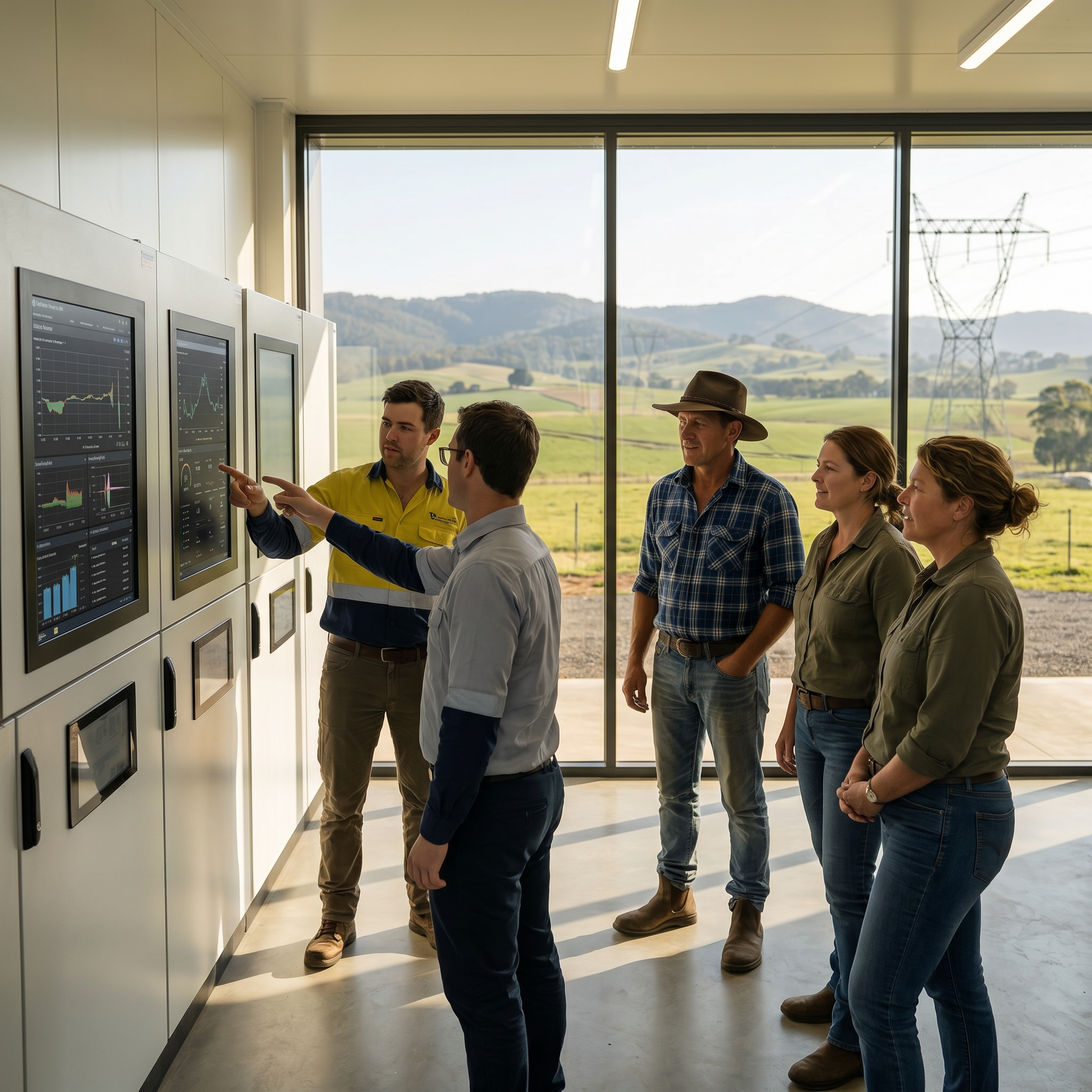
Battery Energy Storage Systems, commonly known as BESS, are becoming an increasingly important part of Australia's electricity network. As more electricity is generated from renewable sources such as solar and wind, batteries help store energy and release it when it is needed.
Understanding how Battery Energy Storage Systems work helps explain why they are often proposed alongside renewable energy developments.
What Is a Battery Energy Storage System?
A Battery Energy Storage System stores electricity for later use. Instead of generating electricity itself, a battery charges when electricity is available and releases that stored energy back into the grid when demand increases.
Why Are Batteries Needed?
Solar panels only generate electricity during daylight hours, while wind generation varies depending on weather conditions.
Battery systems help balance the electricity network by storing excess energy and supplying electricity when renewable generation is lower or demand is higher.
How Do They Work?
Large-scale batteries contain thousands of individual battery cells grouped into modules and housed within secure containers.
Computer systems monitor temperature, charging, safety systems and electricity flows to ensure the facility operates safely and efficiently.
Where Are BESS Facilities Built?
Battery storage facilities are commonly located near:
- Electricity substations.
- Transmission infrastructure.
- Renewable energy developments.
- Areas with suitable access to the electricity grid.
Safety Considerations
Modern battery facilities include multiple safety systems, including fire detection, thermal monitoring, emergency shutdown systems and detailed emergency response planning.
Before approval, proposed battery facilities are typically assessed against planning, environmental and safety requirements.
Community Questions
Many communities ask questions about:
- Fire safety.
- Noise.
- Visual impact.
- Traffic during construction.
- Environmental management.
- Emergency response planning.
- End-of-life recycling and decommissioning.
These are important questions that should be considered during the planning process.
Our Position
Fair Go for North East Country supports providing communities with clear, factual information about Battery Energy Storage Systems.
We believe major infrastructure should be supported by transparent planning, independent assessment and meaningful community consultation before decisions are made.
Looking Ahead
Battery storage is expected to play a growing role in Australia's future electricity system. Understanding how these facilities work helps communities participate in informed discussions about future energy infrastructure.
Fair Go for North East Country is committed to helping residents understand emerging energy technologies through clear, balanced and evidence-based information.