

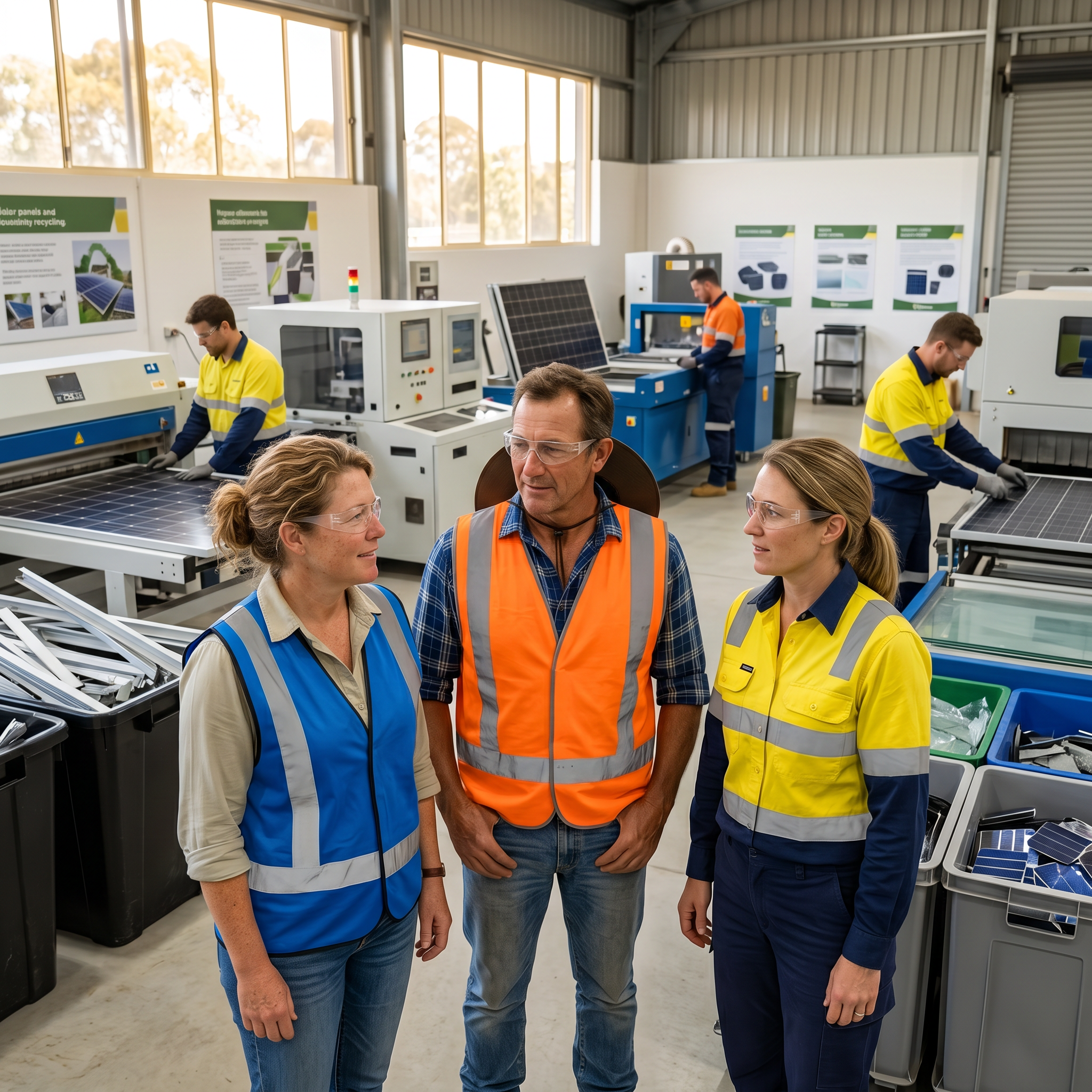
As large-scale solar farms expand across Australia, one question is being asked more frequently: what happens to solar panels when they reach the end of their useful life?
Modern solar panels are designed to last for decades, but like any manufactured product, they will eventually need to be repaired, replaced or recycled. Understanding how this process works is an important part of understanding the full lifecycle of renewable energy.
Can Solar Panels Be Recycled?
Yes. Most modern solar panels contain materials that can be recovered and recycled.
Depending on the panel design and the recycling technology used, materials that may be recovered include:
- Glass.
- Aluminium frames.
- Copper wiring.
- Steel components.
- Silicon materials.
- Some plastics.
The proportion that can be recovered varies depending on the technology and the condition of the panel.
How Does Recycling Work?
Panels are first inspected to determine whether they can be reused or repaired. If not, they are dismantled and processed using specialised equipment that separates different materials for recovery and recycling.
Recovered materials may then be used in the manufacture of new products, reducing the amount of waste sent to landfill.
Why Is Recycling Important?
Recycling helps recover valuable materials, reduces waste and supports a more circular economy for renewable energy infrastructure.
As more solar projects reach the end of their operating life over coming decades, recycling is expected to become an increasingly important industry.
What Challenges Remain?
Although recycling technology continues to improve, challenges remain, including:
- Developing cost-effective recycling systems.
- Expanding recycling facilities.
- Recovering higher percentages of valuable materials.
- Managing increasing volumes of end-of-life panels in the future.
Australia's Future
Australia's first large generation of utility-scale solar farms is still relatively young, meaning the largest volumes of end-of-life panels are expected to emerge over the coming decades.
This provides an opportunity to further develop recycling industries and improve recovery technologies before significant numbers of panels require disposal.
Our Position
Fair Go for North East Country believes communities deserve clear information about the complete lifecycle of renewable energy infrastructure, including recycling, waste management and decommissioning.
Responsible planning should consider not only how projects are built and operated, but also how equipment will be managed at the end of its useful life.
Looking Ahead
Solar recycling is an evolving industry with significant opportunities for innovation and resource recovery. Continued investment in recycling technology will help ensure renewable energy infrastructure remains as sustainable as possible throughout its entire lifecycle.
Fair Go for North East Country supports practical, evidence-based planning that considers every stage of a project's life—from construction and operation through to recycling, rehabilitation and long-term environmental responsibility.