

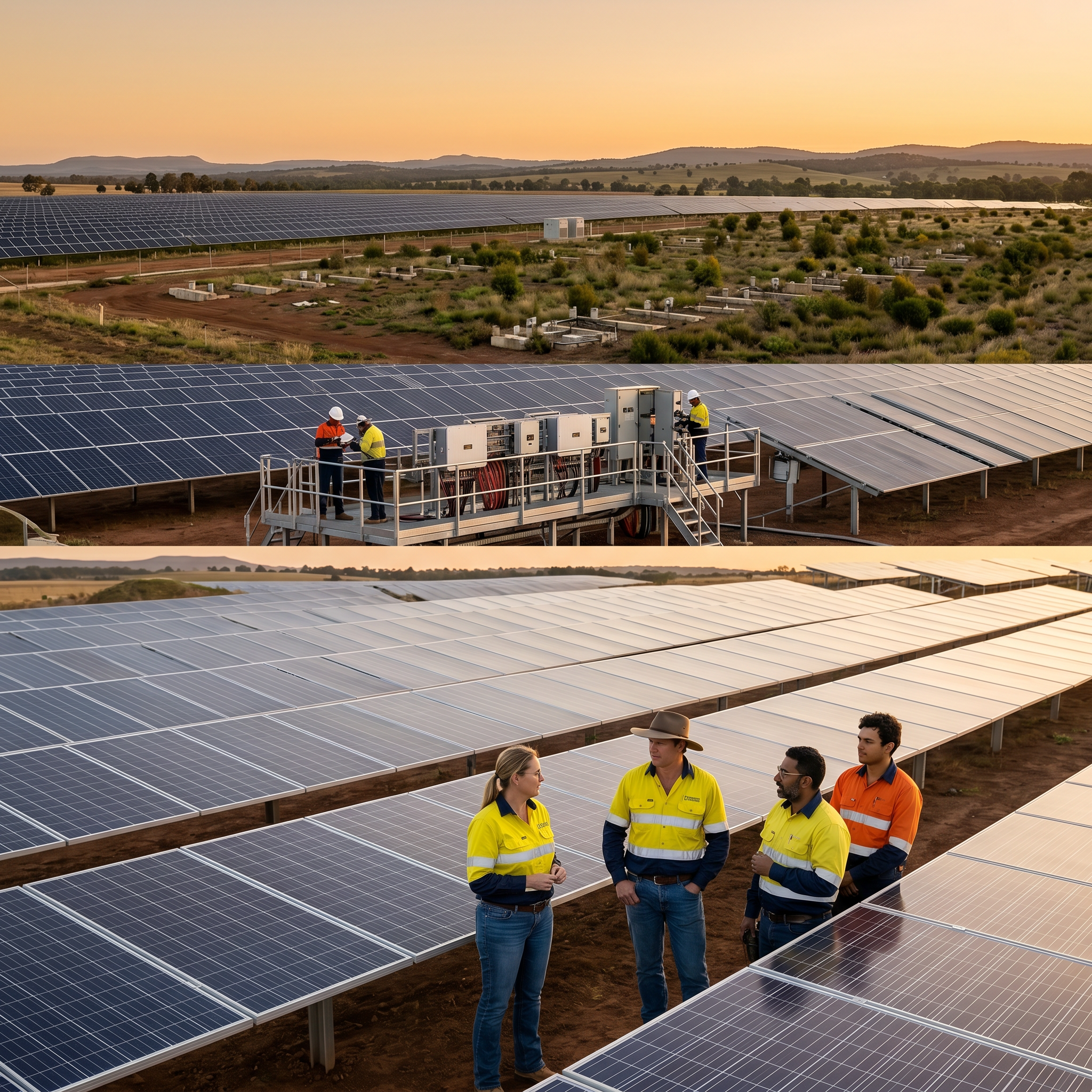
One of the most common questions people ask about large-scale solar developments is how long they will remain on the landscape.
The answer depends on the design of the project, the quality of the equipment, ongoing maintenance and future economic conditions. While there is no single lifespan that applies to every project, most modern utility-scale solar farms are generally designed to operate for around 30 to 40 years.
How Long Do Solar Panels Last?
Most modern solar panels are manufactured with performance warranties of around 25 to 30 years. Importantly, this does not mean they stop working after that time.
Instead, panels gradually lose efficiency over many years, a process known as degradation. Many panels continue producing electricity well beyond their warranty period, although at a lower output than when they were new.
It's More Than Just the Panels
A solar farm is made up of many different components, each with its own expected lifespan.
- Solar panels – typically 30–40 years or more.
- Inverters – often replaced after 10–20 years.
- Transformers and electrical equipment – maintained or replaced as required.
- Tracking systems (where installed) – maintained throughout the project's life.
- Fencing, roads and drainage infrastructure – maintained during operation.
Like any major infrastructure, individual components may be upgraded or replaced over time to keep the facility operating efficiently.
Can a Solar Farm Operate Longer?
Yes.
If equipment is upgraded and the project remains economically viable, some solar farms may continue operating beyond their original design life. Others may be refurbished with newer technology, a process sometimes referred to as repowering.
What Happens When a Solar Farm Reaches the End of Its Life?
At the end of a project's operational life, several options may be considered, depending on planning approvals, lease agreements and future land use.
These may include:
- Removing the infrastructure and rehabilitating the land.
- Replacing equipment with newer technology.
- Seeking approvals to continue operating.
- Returning the land to agricultural production where appropriate.
Who Pays for Decommissioning?
Decommissioning requirements are typically addressed through planning approvals, lease agreements and project conditions. The exact obligations vary between projects and jurisdictions.
Communities often ask whether financial security, rehabilitation plans and long-term responsibilities are clearly defined before projects are approved.
Questions Communities Commonly Ask
- Will the land be restored?
- Can farming return after the project ends?
- How are solar panels recycled?
- Who removes the infrastructure?
- Who pays if the operating company no longer exists?
- Can approvals be extended beyond the original project life?
These are important questions that should be addressed during the planning process and clearly explained to affected communities.
Our Position
Fair Go for North East Country believes communities should have clear information about the full lifecycle of major renewable energy developments before planning decisions are made.
This includes understanding how long projects are expected to operate, how land will be managed during operation, and what commitments exist for rehabilitation and decommissioning.
Looking Ahead
Every major infrastructure project eventually reaches the end of its operational life. Good planning considers not only how a project is built, but also how it will be maintained, decommissioned and managed for future generations.
Fair Go for North East Country supports practical planning that considers the complete lifecycle of major developments—from construction through to rehabilitation—so communities can make informed decisions based on transparent, evidence-based information.