As Victoria moves towards a renewable energy future, you may have heard the term Renewable Energy Zone, often shortened to REZ. These zones are becoming an important part of how the state's electricity network is planned, but many people are unsure what they actually mean.
This article explains what Renewable Energy Zones are, why they exist and why they matter to communities across North East Victoria.
What Is a Renewable Energy Zone?
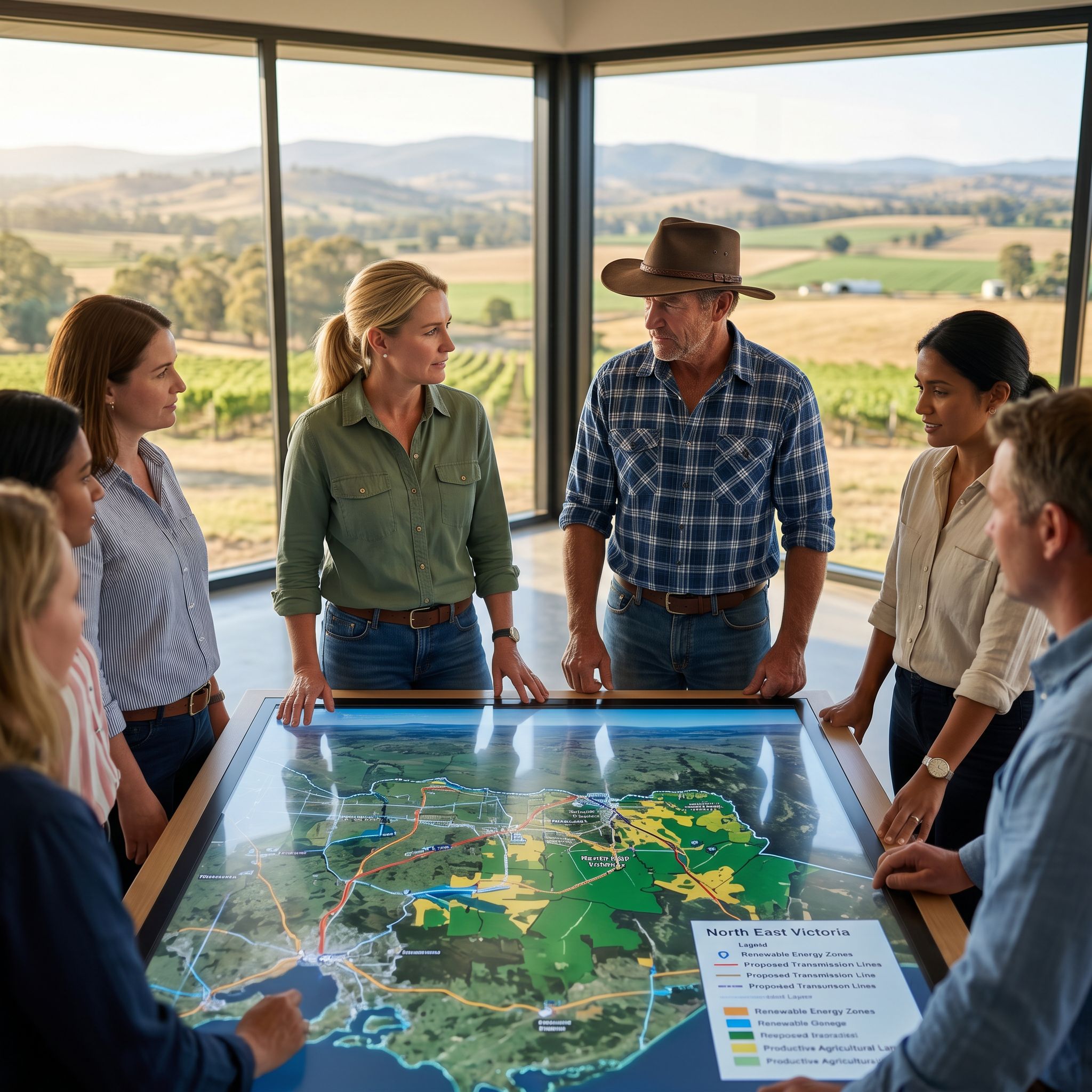
A Renewable Energy Zone (REZ) is a region identified as being suitable for future renewable energy generation and the transmission infrastructure needed to connect that electricity to homes, businesses and industry.
Rather than allowing projects to develop without coordination, Renewable Energy Zones are intended to help plan transmission infrastructure more efficiently and reduce pressure on the electricity network.
Why Were Renewable Energy Zones Created?
Victoria's electricity system is changing rapidly as older power stations retire and renewable energy generation increases.
Renewable Energy Zones help governments and network planners identify where new electricity infrastructure may be required to support future energy generation.
What Can Be Located Within a REZ?
A Renewable Energy Zone may include a range of energy infrastructure, including:
- Solar energy facilities.
- Wind energy facilities.
- Battery Energy Storage Systems (BESS).
- Electricity substations.
- Transmission lines.
- Supporting electricity infrastructure.
Being located within a Renewable Energy Zone does not automatically mean every piece of land will be developed.
Does a REZ Automatically Approve Projects?
No.
Individual projects must still progress through the relevant planning, environmental and approval processes required under Victorian law.
Each proposal is assessed individually and may require technical studies, consultation and government approvals before construction can proceed.
Why Communities Are Interested
Renewable Energy Zones can influence future infrastructure planning across large areas.
Communities therefore have an interest in understanding:
- How transmission corridors may be planned.
- How land use could change over time.
- How agricultural land may be considered.
- How environmental impacts are assessed.
- How consultation occurs before major infrastructure is developed.
Our Position
Fair Go for North East Country supports long-term planning for Victoria's energy future.
We believe Renewable Energy Zones should be planned transparently, supported by meaningful community consultation and balanced with the protection of productive farmland, environmental values and strong regional communities.
Looking Forward
Renewable Energy Zones will play an increasingly important role in Victoria's energy transition.
Understanding what they are—and what they are not—helps communities participate in informed discussions about the future of regional Victoria.
Fair Go for North East Country is committed to providing factual information that helps residents understand renewable energy planning and participate confidently in decisions affecting North East Victoria.